Xi Gui Hao
2016 Bingdao Raw Pu-erh — Aged Lincang Sheng Pu-erh, Ancient-Growth Stone-Pressed Cake & Loose Leaf | Xi Gui Hao
2016 Bingdao Raw Pu-erh — Aged Lincang Sheng Pu-erh, Ancient-Growth Stone-Pressed Cake & Loose Leaf | Xi Gui Hao
Verfügbarkeit für Abholungen konnte nicht geladen werden
Quick Facts
| Tea Type | Raw Pu-erh Tea (Sheng Puerh) |
| Origin | Bingdao Five Villages, Mengku, Shuangjiang, Lincang, Yunnan |
| Elevation | ~1,600m (5,249 ft) |
| Harvest | 2016 Spring — pressed 2020 |
| Tree Age | Ancient-Growth Trees (~400 years) |
| Format | Stone-Pressed Cake 357g / Loose Leaf 50g |
This product is a traditional Chinese tea beverage. Individual experience may vary. Not intended to diagnose, treat, cure, or prevent any disease.
Bingdao Raw Pu-erh Tea — 2016 Spring Lincang Sheng Pu-erh, Ancient Tree Stone-Pressed Cake
In the world of pu-erh tea, there is a mountain called Lao Banzhang — the "King." And there is Bingdao — the "Queen." While Lao Banzhang rules through boldness and power, Bingdao reigns through elegance, sweetness, and a signature cooling sensation in the throat that no other terroir can replicate. This 2016 spring harvest, sourced from the legendary Bingdao Five Villages at ~1,600 meters, has spent a decade transforming. The bright floral notes of youth have settled into a deep, resonant rock-sugar sweetness. The body has thickened to silk. And the cooling throat charm — Bingdao's calling card — has only grown more pronounced with time.
Bingdao (冰岛) — meaning "moss-covered place" in the Dai language — is a 500-year-old Dai village and the birthplace of the Mengku large-leaf tea variety (勐库大叶种). Perched at approximately 1,600 meters in the Mengku range of Lincang, Yunnan, Bingdao's ancient tea trees stand alongside those of Lao Banzhang as the most coveted raw pu-erh material in existence. This cake is made from spring 2016 leaves, hand-picked at dawn from approximately 400-year-old ancient trees across the Bingdao Five Villages. The leaves were processed the same day using traditional "Dian Shai Qing" (滇晒青) methods: iron-wok hand-fixed (sha qing / 杀青) at controlled temperatures, hand-rolled while warm, and sun-dried in a single day — all to preserve the living character of the leaf. After four years of loose-leaf aging in a dry, controlled Yunnan warehouse, the maocha was stone-pressed into cakes in 2020. Nearly a decade since the leaves were picked, this tea has entered its golden drinking window.
"Pu-erh Queen" — What Makes Bingdao the Benchmark of Elegance
Pu-erh drinkers speak of a "King and Queen" — Lao Banzhang (老班章) as the King, Bingdao as the Queen. Where Lao Banzhang commands attention with bold, aggressive bitterness and roaring huigan, Bingdao captivates through silken sweetness, zero harshness, and a signature throat sensation that no other mountain can replicate: the "rock-sugar cooling charm" (冰糖清凉韵). After swallowing, a clean, cool sweetness rises from the throat — not the cloying sweetness of sugar, but the crystalline clarity of mountain spring water on a summer day. It's a sensation that tea collectors spend years chasing, and it's the single reason Bingdao commands some of the highest prices in the pu-erh world.
2016: A landmark year. In 2016, Bingdao ancient-tree raw material reached approximately 8,000 RMB (~$1,100) per kilogram at the source — one of the highest prices in pu-erh history at that time, driven by surging collector demand. Cakes from this vintage that survive today are recognized as markers of both peak material quality and market confidence. This cake carries that provenance.
Bingdao Sheng Pu-erh Tasting Notes — 2016 Vintage
| Attribute | Description |
|---|---|
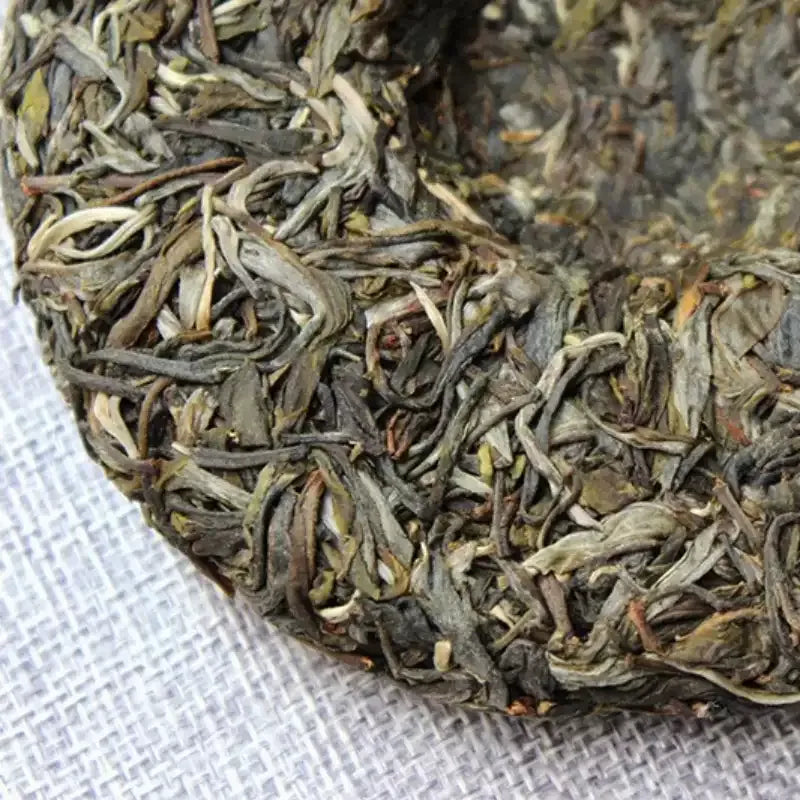
| Dry Leaf | Plump, substantial strands with prominent fat buds densely covered in silver-white down. The color has shifted from youthful dark green to a deep, lustrous ebony-brown with an oily sheen — the visual signature of well-aged material. The dry aroma is restrained and elegant, with a quiet sweetness. |
| Liquor | Golden-bright and remarkably oily — the tea coats the glass like warm honey. Noticeably deeper in color than younger Bingdao, with a thick, almost syrupy viscosity that signals a decade of transformation. Crystal clarity is maintained throughout the session. |
| Aroma | The young Bingdao's soaring orchid fragrance has matured into a deep, integrated bouquet of honeyed florals and rock-sugar sweetness — not floating above the cup, but woven into the body of the tea itself. The empty cup leaves a lasting honey-cool fragrance that persists for an unusually long time. This is the aroma of a tea that has settled into itself. |
| Taste | Sweetness is the dominant note — clean, crystalline, and immediate. Any bitterness or astringency present in the tea's youth has been almost entirely resolved by a decade of dry storage. The signature rock-sugar sweetness (冰糖甜) runs from the first sip to the last, unwavering and pure. There is no harshness, no edge — only a deep, elegant sweetness supported by a full, structured body. This is Bingdao at its most refined. |
| Mouthfeel | Exceptionally thick and viscous, with a silky, lubricating texture that glides across the tongue and coats the entire mouth. The body is substantial and full — not a thin, fleeting cup, but one that fills the palate with real presence. Pectin-rich ancient-tree material expresses itself unmistakably here. |
| Finish | This is where Bingdao's legend lives. Huigan (pleasant aftertaste) arrives swiftly and powerfully. Saliva production is generous and sustained. And then comes the signature: a clean, cooling sweetness rises from the throat — the "rock-sugar cooling charm" (冰糖清凉韵) that distinguishes Bingdao from every other pu-erh terroir. It's not just sweet. It's cool. It's lasting. From throat to cheeks, the sweetness lingers for 15 minutes or more. |
| Longevity | 20+ infusions in gongfu style — and remarkably, the liquor remains stable in both color and flavor well past the 20th steep. The late steeps are a pure expression of sweetness: clean, soft, and lingering, with no trace of fatigue. This is the endurance that ~400-year-old tree material delivers. |
Who Is This Tea For?
- The Connoisseur of Complex Flavors. If you appreciate single-malt whisky, aged Bordeaux, or any pursuit where time transforms something excellent into something extraordinary — Bingdao is your tea. Its layered sweetness, cooling throat charm, and decade-long evolution offer a tasting experience comparable to the world's finest aged beverages.
- The Pu-erh Beginner (Who Wants the Best). Bingdao's near-zero bitterness and silky, sweet character make it one of the most approachable aged sheng pu-erh teas in existence. You don't need years of tea experience to understand why this tea is special — you just need a cup. Many serious collectors trace their pu-erh passion back to their first sip of Bingdao.
How Bingdao Compares to Other Famous Pu-erh Mountains
| Terroir | Character | Sweetness | Aging Arc |
|---|---|---|---|
| Bingdao | Elegant, silky, cooling throat charm — "Pu-erh Queen" | Extreme — rock-sugar sweetness, crystalline and pure | 10yr: golden window. 20yr+: legendary status |
| Lao Banzhang | Bold, aggressive, powerful bitterness → explosive huigan — "Pu-erh King" | Moderate — overshadowed by structural intensity | 5-10yr: bitterness softens. 15yr+: full integration |
| Xigui | Rocky-mineral, complex, strong backbone with gentler entry | Moderate — mineral-sweet, layered | 5-10yr: camphor-medicinal notes develop |
Bingdao's position is singular: it is the purest expression of sweetness and elegance in the pu-erh world. Where other famous mountains challenge you, Bingdao welcomes you — and then rewards your attention with layers of cooling, lasting complexity that reveal themselves only through patient drinking.
Product Details
| Brand | Xi Gui Hao (昔归号) |
| Tea Type | Raw Pu-erh Tea (Sheng Puerh) |
| Vintage | 2016 Spring Harvest — pressed into cake 2020 |
| Origin | Bingdao Five Villages, Mengku Town, Shuangjiang County, Lincang, Yunnan, China |
| Tree Age | Ancient-Growth Trees (~400 years) |
| Altitude | ~1,600m |
| Net Weight | 357g (12.59oz) Cake / 50g (1.8oz) Loose Leaf |
| Format | Traditional stone-pressed cake — 2016 maocha, pressed 2020 after 4 years of loose-leaf dry-storage |
| Processing | Dawn hand-picked, iron-wok hand-fixed (sha qing / 杀青, <180°C), hand-rolled, single-day sun-dried (sun-dried maocha), stone-pressed |
| Storage | Dry storage (干仓), Yunnan — controlled conditions since harvest |
How to Brew 2016 Bingdao Raw Pu-erh Tea
Gongfu Style (Recommended)
- Vessel: Porcelain gaiwan, 120–150ml — or Yixing clay pot for enhanced body
- Amount: 8g
- Temperature: 100°C (212°F) — a decade-aged raw pu-erh needs full boiling water to fully express
- Rinse: 1 quick rinse — pour boiling water, decant immediately. This "wakes" the tea after years of slumber
- Steeping: First 3–4 infusions: 5–10 seconds, quick decant. After steep 5, increase by 5–10 seconds per round. 20+ infusions achievable. Pay attention to the throat — the cooling sensation builds across infusions.
Simple Mug Style
Break off ~3g, add to a mug with 100°C boiling water, steep 3–5 minutes. Refill as you drink — you'll get a full day of sweet, smooth cups from the same leaves. A decade of aging has made this Bingdao remarkably forgiving of casual brewing.
💡 For best results, break off the amount you need and let it rest in a tea caddy for 3–7 days before brewing — this gentle air contact allows the leaf fragrance to bloom fully.
How to Store (Aging Potential)
Store in a cool, dry environment away from direct sunlight, strong odors, and humidity. Ideal: temperature 20–25°C (68–77°F), relative humidity 55–65%. Keep in the original cotton paper wrapper or transfer to a breathable kraft paper bag or unglazed clay jar. Never store near kitchens, bathrooms, or any source of foreign odors.
| Stage | What to Expect |
|---|---|
| Years 1–3 | Vibrant, stimulating — full tea character but still developing roundness and depth |
| Years 3–6 | Smoothing and deepening — the golden window for daily drinking begins. Aroma becomes more layered |
| Years 6–10 | Peak integration — rock-sugar sweetness and honeyed depth fuse completely. Body achieves silk-like smoothness. This 2016 cake is here now. |
| 10+ Years | Apex expression — all dimensions (aroma, taste, mouthfeel, finish) reach their fullest harmony. Requires careful storage to maintain quality at this stage |
Suitable for long-term aging when stored properly.
Bingdao Raw Pu-erh Tea — Frequently Asked Questions
Why is Bingdao called the "Queen" of pu-erh tea?
Lao Banzhang is the "King" — bold, aggressive, commanding. Bingdao is the "Queen" — elegant, sweet, and refined. Its signature rock-sugar sweetness (冰糖甜) and cooling throat sensation (清凉韵) are uniquely soft and sophisticated, without the aggressive bitterness that defines other famous mountains. It's a tea that captivates through grace rather than power.
What makes the 2016 vintage special for Bingdao?
2016 was a landmark year for Bingdao. Ancient-tree raw material prices reached approximately 8,000 RMB (~$1,100) per kilogram — among the highest in pu-erh history at that time, driven by surging demand. A cake from this vintage that has survived a decade of proper dry storage represents both peak-period material quality and a documented point in pu-erh market history. It's a vintage with provenance.
How do I understand Bingdao's "rock-sugar sweetness" and cooling sensation?
The "rock-sugar sweetness" (冰糖甜) is not sugar-rich or cloying — it's a clean, crystalline sweetness with a faint cooling edge, like drinking mountain spring water on a warm day and tasting the freshness. After swallowing, a cool, sweet sensation rises gently from the throat and spreads. The "huigan" — the returning sweetness — stimulates saliva and fills the mouth with a lasting, moist sweetness. It's one of pu-erh tea's most celebrated sensory experiences.
About caffeine in pu-erh: Like all real teas, raw pu-erh contains natural caffeine — actual caffeine content varies by brewing method, leaf-to-water ratio, and steeping time. Natural & Handcrafted: This product is made from natural tea leaves, hand-picked at dawn, iron-wok hand-fixed (sha qing / 杀青, <180°C), hand-rolled, and sun-dried using traditional "Dian Shai Qing" methods in Yunnan, China. It contains no artificial additives, flavorings, or preservatives. All flavor characteristics — including the signature rock-sugar sweetness and cooling throat sensation — are the natural result of the tea's growing environment, ancient-tree genetics, and traditional processing methods. This product is a traditional tea beverage and is not intended to diagnose, treat, cure, or prevent any disease.
Share