Xi Gui Hao
2025 Dingjiazhai Raw Pu-erh Tea — Wild Forest Yiwu Sheng Puerh, Ancient Tree Cake | Xi Gui Hao
2025 Dingjiazhai Raw Pu-erh Tea — Wild Forest Yiwu Sheng Puerh, Ancient Tree Cake | Xi Gui Hao
Couldn't load pickup availability
Quick Facts
| Tea Type | Raw Pu-erh Tea (Sheng Puerh) |
| Origin | Dingjiazhai, Manla, Yiwu, Mengla, Xishuangbanna, Yunnan |
| Elevation | ~1,500m (4,921 ft) |
| Harvest | 2025 Spring Harvest |
| Tree Age | Tall-Trunk Ancient Trees (~200 years) |
| Format | Stone-Pressed Cake 357g / Loose Leaf 50g |
This product is a traditional Chinese tea beverage. Individual experience may vary. Not intended to diagnose, treat, cure, or prevent any disease.
Dingjiazhai Raw Pu-erh Tea — 2025 Spring "Wild Forest" Yiwu Sheng Pu-erh
Three to four hours by rugged mountain trail from the nearest road, deep inside Yiwu's state-owned forest, Yao tea farmers tend to the legendary gardens of Wan Gong, Baichayuan, and Bohetang. This is Dingjiazhai (丁家寨) — a Yao ethnic village whose tea carries the DNA of both Yiwu's signature softness and the untamed wildness of pristine forest. Its ancient trees grow as tall trunks (高杆古树), reaching for light through the forest canopy. The result is a tea with "wild charm and honey fragrance" (野韵蜜香) — soft as silk on the surface, steel underneath.
Dingjiazhai traces its origins to Wan Gong (弯弓) — once the largest village in ancient Mansa tea mountain, with 400+ households and a magnificent Guandi Temple. Wan Gong's decline remains a mystery — local accounts cite both plague and conflict as possible causes — but the tea gardens survived. The Yao people who settled Dingjiazhai inherited these gardens, and their unique processing philosophy — light rolling, "thrown strips" (抛条), stone-pressing — preserves the leaf's inner qualities for even, gradual aging. The core gardens of Wan Gong, Baichayuan, and Bohetang sit deep in state-owned forest, inaccessible by road. During the Qing Daoguang-Xianfeng era, Wan Gong tea was imperial tribute. The Tea Horse Road's Yiwu-Jiangcheng branch passed through Dingjiazhai, carrying tribute north. Today, Dingjiazhai's gardens sit in the deep southeast corner of Xishuangbanna, where the subtropical monsoon and mountain microclimate create one of Yunnan's most prized raw pu-erh terroirs.
Dingjiazhai Sheng Pu-erh Tasting Notes
| Attribute | Description |
|---|---|
| Dry Leaf | Evenly thick, naturally extended strands in the classic Yiwu "thrown strip" style. Fat buds with dense down. Glossy and oily. Clean wild forest fragrance. |
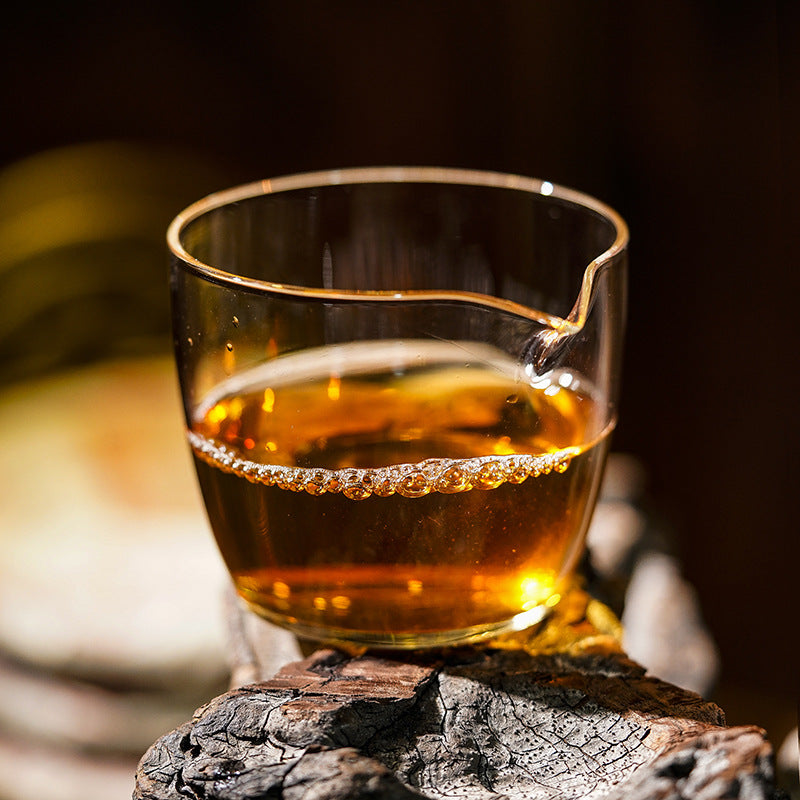
| Liquor | Golden bright, shifting to orange-gold with age. Clear and lustrous — the tall-trunk material expresses itself as luminous depth. |
| Aroma | Honey and floral notes in exceptional harmony — the classic Yiwu fragrance profile elevated by wild forest character. The cup fragrance is lasting and complex. This is the scent of trees that grow surrounded by forest, not plantation. |
| Taste | Full and rich from the first sip. Strong wild mountain character underpins the classic Yiwu softness — sweetness on the surface, structure underneath. The Yao "light rolling" technique preserves complexity without forcing extraction. |
| Mouthfeel | Thick with excellent viscosity — the tall-trunk trees produce a dense, sticky body. Extremely smooth and mellow despite the thickness. "Soft exterior, hard interior" in textural form. |
| Finish | Salivation begins on entry. Huigan is fast and throat sweetness is lasting. The wild forest character expresses itself most clearly in the finish — a clean, persistent sweetness that lingers. |
| Longevity | 15+ infusions. The tall-trunk material's rich inner substances sustain depth well past expectations. Tail water is clean and sweet, a gentle closing note. |
Who Is This Tea For?
- The Yiwu Tea Purist. You seek the classic Yiwu "fragrance high, water soft" style at its most authentic. Dingjiazhai's Yao village processing and tall-trunk trees deliver Yiwu without compromise.
- The Aged Pu-erh Collector. Dingjiazhai is famous for improving with age. The light-rolling technique preserves inner qualities for gradual, even transformation — new tea has a "special thick fragrance," aged tea gains remarkable depth and layering.
- The Nature & Ecology Appreciator. Tea trees growing deep in state-owned forest, surrounded by biodiversity, processed by hand. This is pu-erh at its most connected to the land.
Product Details
| Brand | Xi Gui Hao (昔归号) |
| Tea Type | Raw Pu-erh Tea (Sheng Puerh) |
| Vintage | 2025 Spring Harvest |
| Origin | Dingjiazhai, Manla, Yiwu, Mengla, Xishuangbanna, Yunnan, China |
| Tree Age | Tall-Trunk Ancient Trees (~200 years) |
| Altitude | ~1,500m |
| Net Weight | 357g (12.59oz) Cake / 50g (1.8oz) Loose Leaf |
| Format | Traditional stone-pressed cake — Yao "thrown strip" style |
| Processing | Dawn hand-picked, iron-wok fixed, Yao light-rolling (multi-fire), sun-dried, stone-pressed |
How to Brew
Dingjiazhai's Yao-style thrown strips (抛条) and light-rolling processing — finished with multi-fire drying (多次烘干), a Yao technique that preserves the leaf's natural integrity — produce tightly twisted leaves that open gradually in the cup. We recommend starting with gongfu brewing to experience how the flavor unfolds infusion by infusion. Begin by warming your gaiwan and teapot, then let the dry leaf rest in the heated vessel for 30 seconds — this "wake-up" step releases the tea's honey and forest aromatics before you even pour water.
Gongfu Style
8g / 120–150ml gaiwan or Yixing pot / 95–100°C water / quick rinse & discard / 5–10s first infusion, add 5s each step / 15+ infusions
Mug Style
3g / mug / 95–100°C water / 3–5 min. For best results, pre-warm the mug and give the leaves a quick 2-second hot rinse before steeping.
How to Store & Aging Journey
Store in a cool, dry, odor-free environment at 20–25°C and 55–65% RH. Dingjiazhai is famous for improving dramatically with age — the Yao light-rolling technique and thrown-strip style preserve inner qualities for gradual, even transformation.
| Stage | Age | Character |
|---|---|---|
| Young | 1–3 Years | Fragrant and wild — honey notes dominant, forest character vibrant, thick mouthfeel with lively huigan |
| Early Aged | 3–6 Years | Wildness mellows into honey — bitterness recedes, liquor deepens to orange-gold, floral notes gain warmth |
| Developing | 6–10 Years | Aged notes emerge — camphor and medicinal hints begin, texture thickens considerably, layered complexity |
| Mature | 10+ Years | Full aged charm — deep raisin and dried date sweetness, silky body, enduring throat resonance. Suitable for long-term aging when stored properly. |
Dingjiazhai vs. Other Yiwu Regions
Yiwu is a tea mountain of contrasts — neighboring villages can produce dramatically different raw pu-erh profiles even within the same mountain range. Here's how Dingjiazhai compares:
| Region | Style | Signature | Key Difference |
|---|---|---|---|
| Dingjiazhai | Wild-honey Yiwu | Honey + forest depth | Tall-trunk trees, Yao processing, thickest body |
| Mansa / Yiwu | Classic Yiwu | Soft, fragrant, elegant | Less wild character, more refined "fragrance high, water soft" purity |
| Bohetang | Mint-cool Yiwu | Cooling freshness | Distinctive mint-like cooling, lighter body than Dingjiazhai, more ethereal |
| Guafengzhai | Gentle-grass Yiwu | Nongxiang + sweetness | Richer fragrance, gentler structure — Dingjiazhai carries more wild forest backbone |
Why is it called "Yao Village Tea"?
Dingjiazhai is a Yao ethnic village. The famous gardens (Bohetang, Wan Gong) are managed by Yao farmers who have lived in these mountains for generations. Their unique light-rolling technique defines the tea's character.
Where do the tea trees grow?
Deep in state-owned forest, 3-4 hours by rugged mountain trail. Tea trees grow as tall trunks among the forest canopy, surrounded by natural biodiversity — the source of the tea's distinctive wild character.
How does it change with aging?
Dingjiazhai is famous for improving with age. New tea has a "special thick fragrance." Aged, the flavor becomes more concentrated with greater texture, depth, and layering — the light-rolling technique enables gradual, even transformation.
Shop Dingjiazhai Pu-erh Online →
About caffeine: Raw pu-erh contains natural caffeine — content varies by brewing method. Natural & Handcrafted: Made from natural leaves, hand-picked, iron-wok fixed, sun-dried in Yunnan. No artificial additives. This product is a traditional tea beverage and is not intended to diagnose, treat, cure, or prevent any disease.
Share