Xi Gui Hao
Baihuatan Wild Orchid Sheng Puerh 2025 | Yiwu Old Tree Raw Pu-erh Loose Leaf Tea | Xi Gui Hao
Baihuatan Wild Orchid Sheng Puerh 2025 | Yiwu Old Tree Raw Pu-erh Loose Leaf Tea | Xi Gui Hao
Couldn't load pickup availability
Quick Facts
| Tea Type | Raw Pu-erh Tea (Sheng Puerh) |
| Origin | Baihuatan, Tongqing River, Yiwu, Mengla, Xishuangbanna, Yunnan |
| Elevation | ~1,700m (5,577 ft) |
| Harvest | 2025 Spring Harvest (First Flush) |
| Tree Age | Mature Old-Growth Trees (~70 years) |
| Format | Loose Leaf — 20g / 50g / 100g |
This product is a traditional Chinese tea beverage. Individual experience may vary. Not intended to diagnose, treat, cure, or prevent any disease.
Baihuatan Wild Orchid Raw Pu-erh Tea — 2025 Spring Yiwu Sheng Pu-erh, Old-Growth Loose Leaf
Deep inside Yiwu's pristine state forest, where three mountain rivers converge at 1,700 meters, lies one of pu-erh's most elusive micro-terroirs: Baihuatan (百花潭). Discovered only in 2012, this hidden garden produces a raw pu-erh tea unlike any other — naturally infused with the fragrance of wild orchids, wild ginger flowers, and gardenias that grow alongside the tea trees in untouched primary forest. No scenting. No flavoring. Pure terroir, expressed in every cup.
Baihuatan sits within the Tongqing River (同庆河) watershed in Yiwu, Xishuangbanna — a core protected area of Yunnan's state forest where over 95% of original old-growth cover remains. The tea trees, planted by local tea farmers approximately 70 years ago and now standing 3–8 meters tall, share their soil with wild orchids, ginger blossoms, ferns, and countless other native plants. This living ecosystem is the source of Baihuatan's signature floral character: the tea roots absorb organic compounds from the surrounding flora over decades, creating a natural aromatic complexity that cannot be replicated by any artificial process. There are no roads into Baihuatan — every harvest requires hours of trekking on foot through mountain trails. The annual yield is roughly 5 tons for the entire micro-region, making this one of the scarcest single-origin raw pu-erh teas available.
Natural Orchid Fragrance — Not Added, Not Artificial
One of the first questions people ask when they encounter Baihuatan is: "Was this tea scented?" The answer is no — absolutely not. The fragrance comes entirely from the tea's growing environment. In traditional Chinese tea processing, some teas are scented by layering them with fresh flowers (a technique called xun hua / 窨花). Baihuatan is never processed this way. Its complex floral aroma develops naturally because the tea trees grow in direct proximity to wild orchids and other flowering plants, absorbing trace organic compounds through the soil and air over many years. What you smell in the cup is the forest itself.
A note on the fragrance: The term "Baihuatan" translates roughly to "Hundred Flowers Pool" — but this is a poetic name, not a literal description. In practice, the aroma presents as 3–4 distinct floral notes woven together rather than a single dominant note. You may notice orchid, wild ginger flower, and gardenia at different moments during your session, with an underlying honey sweetness binding them together. The fragrance evolves across infusions rather than hitting all at once.
Baihuatan Sheng Pu-erh Tasting Notes
| Attribute | Description |
|---|---|
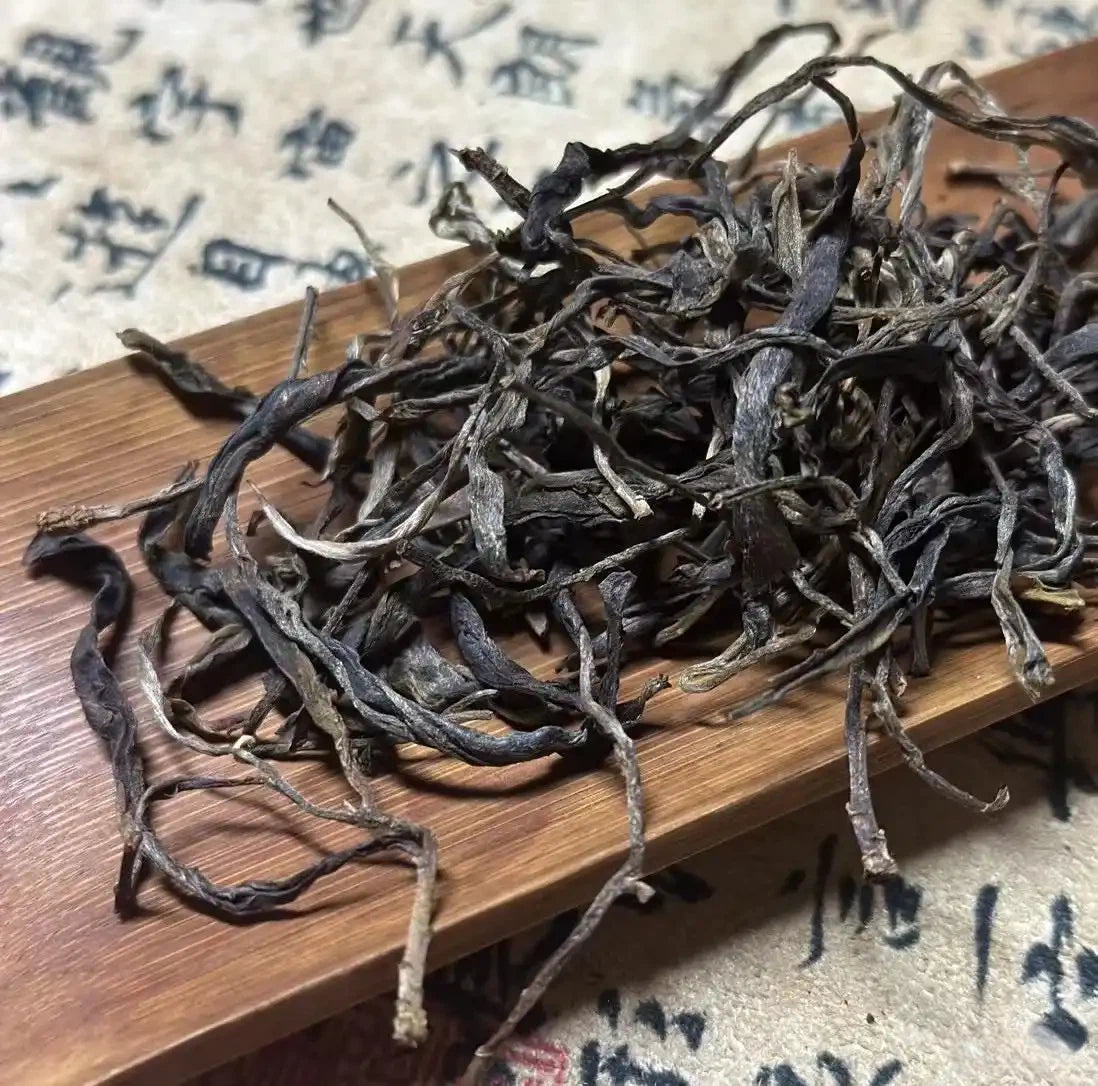
| Dry Leaf | Sleek, tightly rolled strands with a lustrous dark green sheen. Silver buds are visible throughout. The dry leaf gives off a clean, wild honey sweetness with a faint green-herbal note. |
| Liquor | A clear, bright gold — luminous and lively, with a silky viscosity that coats the glass. As the tea ages, the color will deepen to a rich amber. |
| Aroma | A layered bouquet of orchid, wild ginger flower, and gardenia, interwoven with a distinct honey sweetness. The fragrance rises naturally from the cup — no artificial scenting, ever. The empty cup retains a lingering honey-sweet coolness long after the last sip. |
| Taste | Naturally sweet from the first sip, reminiscent of rock sugar water. Almost no astringency — only the faintest hint of bitterness appears in steeps 3–4 and dissolves instantly. The hallmark Yiwu softness is unmistakable: silky, smooth, and enveloping the palate without any roughness. The sweetness builds through multiple infusions rather than fading. |
| Mouthfeel | Thick and viscous with a lubricating quality — the liquor glides across the tongue like warm silk. Pectin-rich body gives real substance to each cup. |
| Finish | Swift, powerful huigan (huigan, pleasant aftertaste) arrives within seconds and builds steadily. Saliva production is generous and sustained. A cooling sensation lingers in the throat, and a gentle sweetness remains in the mouth for 10 minutes or more after drinking. |
| Longevity | 12–15 infusions in gongfu style. Even the final steeps retain a pleasant sweetness and delicate floral trace — a mark of genuine old-tree material. |
Who Is This Tea For?
- The Aroma Lover. If you're drawn to teas with layered, evolving fragrance — the kind that shifts with each steep and rewards close attention — Baihuatan offers a distinct experience. Its natural orchid profile is rarely found in other Yiwu pu-erhs, making it a noteworthy addition to any loose leaf pu-erh tea collection.
- The Raw Pu-erh Newcomer. Baihuatan's gentle character makes it an ideal introduction to sheng pu-erh. Minimal bitterness, no harsh astringency, and a sweetness that arrives immediately. You don't need years of tea experience to enjoy this — just a curious palate.
- The Seasoned Collector. With an annual output of roughly 5 tons and zero road access, Baihuatan is one of the scarcest micro-terroirs in Yiwu. To put this in perspective: West Lake Longjing (Xi Hu Longjing), one of China's most famous teas, produces around 500–600 tons annually from its core producing area — Baihuatan's total annual output is less than 1% of West Lake Longjing's core production. Its aging potential is significant — the floral character will evolve into deeper honeyed and dried-fruit notes over years of proper storage. This is a floral pu-erh tea that belongs in any serious collector's tea cellar.
How Baihuatan Compares to Other Yiwu Teas
Baihuatan sits within the broader Yiwu tea region, but its micro-terroir sets it apart from more widely known Yiwu areas like Yiwu Town, Mahei, or Gutian. Here's how it compares:
| Terroir | Aroma Profile | Body & Mouthfeel | Scarcity |
|---|---|---|---|
| Yiwu Town | Gentle floral, honey-sweet | Soft, rounded, approachable | Moderate — widely available |
| Mahei | Floral-honey, slightly mineral | Medium body, smooth | Moderate |
| Gutian | Sweet, herbal, forest-floor | Fuller body, more structure | Moderate to high |
| Baihuatan | Distinct orchid & wild ginger flower, layered & evolving | Thick, viscous, pectin-rich, silky | Very high — ~5 tons/year, no road access |
The key difference: Baihuatan's orchid-like fragrance is unmistakable and cannot be replicated by blending. If you've tried Yiwu teas before and found them pleasant but not memorable, Baihuatan's distinct floral character may change your perspective on what Yiwu is capable of expressing. This is a aged pu-erh candidate worth setting aside for 3–5 years.
Product Details at a Glance
| Brand | Xi Gui Hao (昔归号) |
| Tea Type | Raw Pu-erh Tea (Sheng Puerh) |
| Vintage | 2025 Spring Harvest (First Flush) |
| Origin | Baihuatan, Tongqing River watershed, Yiwu, Mengla, Xishuangbanna, Yunnan, China |
| Tree Age | Mature Old-Growth Trees (~70 years) |
| Altitude | ~1,700m |
| Net Weight | 20g (0.7oz) / 50g (1.8oz) / 100g (3.5oz) |
| Format | Loose leaf — pure sun-dried material, no pressing |
| Processing | Hand-fixed (sha qing / 杀青), hand-rolled, sun-dried (sun-dried maocha) |
How to Brew Baihuatan Raw Pu-erh Tea (Gongfu & Simple Methods)
Gongfu Style (Recommended)
- Ratio: 7g to 120–150ml gaiwan (gaiwan, lidded tea bowl)
- Temperature: 92°C – 95°C (197°F – 203°F) — slightly cooler than you'd use for aged sheng, to preserve the delicate floral notes
- Rinse: 1 quick rinse, 5 seconds, discard
- Steeping: 8–10 seconds for the first 3 infusions, increase by 3–5 seconds each round. 12–15 infusions achievable. Pay attention to the aroma — it shifts from honey-forward in early steeps to more floral in the middle rounds.
Simple Mug Style
Add 3g of loose leaf to your mug with 90–95°C water, steep 1–2 minutes. Refill as you drink — each cup is slightly lighter and sweeter. This is one of the most forgiving raw pu-erh teas for casual brewing. Even a quick steep yields a pleasant, fragrant cup.
How to Store (Aging Potential)
Store in a cool, dry, well-ventilated place away from direct sunlight and strong odors. Ideal storage conditions: temperature 20–25°C (68–77°F), relative humidity 55–65%. Keep sealed in the original packaging or transfer to a breathable kraft paper bag or unglazed clay jar. Avoid temperature fluctuations and any source of foreign odors — pu-erh leaves are highly absorbent.
As a young raw pu-erh from a pristine forest terroir, this tea has excellent aging potential. Over 1–3 years, the bright floral notes will gradually integrate with deeper honeyed and stone-fruit characters, while the liquor gains body and smoothness. Properly stored, it will continue evolving and rewarding patience for years to come. Many collectors buy pu-erh online specifically for long-term aging — Baihuatan's old-growth material makes it a strong candidate for 5–10 year storage.
Baihuatan Raw Pu-erh Tea — Frequently Asked Questions
Is Baihuatan pu-erh artificially scented?
No — absolutely not. The floral aroma is entirely natural, absorbed from the forest ecosystem where wild orchids, ginger flowers, and gardenias grow alongside the tea trees. Baihuatan is never processed with xun hua (窨花, flower scenting). What you smell is the terroir itself.
How should I store Baihuatan raw pu-erh?
Store in a cool, dry, odor-free place at 20–25°C (68–77°F) and 55–65% relative humidity. A breathable kraft paper bag or unglazed clay jar works best. Keep away from sunlight, spices, and any source of strong odors — pu-erh leaves are highly absorbent. Properly stored, this tea will age beautifully for 5–10+ years.
Where can I buy Baihuatan pu-erh tea online?
Baihuatan is one of the rarest single-origin Yiwu raw pu-erh teas available, with an annual yield of only ~5 tons. You can shop Baihuatan pu-erh tea online here at Brook Tea — we source directly from the tea farmers in Yunnan. Each order ships free on orders $49+, with delivery in 7–15 days from our Yunnan facility.
About caffeine in pu-erh: Like all real teas, raw pu-erh contains natural caffeine — actual caffeine content varies by brewing method, leaf-to-water ratio, and steeping time. Some tea drinkers prefer its smooth character to coffee as a daily ritual. Natural & Handcrafted: This product is made from natural tea leaves, hand-picked, hand-fixed (sha qing / 杀青), and traditionally sun-dried (sun-dried maocha) in Yunnan, China. It contains no artificial additives, flavorings, fragrances, or preservatives. The floral aroma is a natural result of the tea's forest growing environment and is not the product of scenting or flavoring. This product is a traditional tea beverage and is not intended to diagnose, treat, cure, or prevent any disease.
Share