Xi Gui Hao
Zhengqitang Raw Pu-erh Tea Cake — 2025 Spring Mengku Sheng Pu-erh, Old-Growth Stone-Pressed 357g | Xi Gui Hao
Zhengqitang Raw Pu-erh Tea Cake — 2025 Spring Mengku Sheng Pu-erh, Old-Growth Stone-Pressed 357g | Xi Gui Hao
Couldn't load pickup availability
Quick Facts
| Tea Type | Raw Pu-erh Tea (Sheng Puerh) |
| Origin | Zhengqitang, Dongbanshan, Mengku, Shuangjiang, Lincang, Yunnan |
| Elevation | ~1,800m (5,906 ft) |
| Harvest | 2025 Spring Harvest (First Flush) |
| Tree Age | Old-Growth Trees (~200 years) |
| Format | Stone-Pressed Cake — 357g |
This product is a traditional Chinese tea beverage. Individual experience may vary. Not intended to diagnose, treat, cure, or prevent any disease.
Zhengqitang Raw Pu-erh Tea — 2025 Spring Mengku Sheng Pu-erh, Old-Growth Stone-Pressed Cake
High on Dongbanshan's mist-shrouded slopes at 1,800 meters, the ancient tea village of Zhengqitang (正气塘) produces a raw pu-erh tea that tea connoisseurs call "Little Bingdao" (小冰岛) — and the name is earned. It delivers the honeyed sweetness of Bingdao's legendary old trees, but with the unmistakable backbone and vitality that only Dongbanshan's high-altitude terroir can impart. Sweetness with structure. Gentleness with depth. This is the Mengku raw pu-erh that collectors seek out when Bingdao prices pass reachable.
Zhengqitang is the highest-altitude ancient tea village in Mengku's Dongbanshan (东半山) range, part of the famed Mengku Eighteen Villages (勐库十八寨). Perched at ~1,800 meters, the village is wrapped year-round in cloud forest — tea trees planted by local tea farmers generations ago now stand alongside untouched old-growth vegetation. The leaves are hand-picked, hand-fixed (sha qing / 杀青), hand-rolled, sun-dried, and stone-pressed into 357g cakes using traditional methods. Everything is done by hand. Everything is done on the mountain. The result is a raw pu-erh tea cake that expresses both the soft, honeyed sweetness Dongbanshan is known for and a distinctive structure — a clean, resonant body that lingers in the throat long after drinking. This is what tea people mean by "sweet yet structured" (甜而有骨): the sweetness that reminds you of Bingdao, held up by a framework that is unmistakably Dongbanshan.
Why Is Zhengqitang Called "Little Bingdao"?
Bingdao (冰岛) is the most expensive pu-erh terroir in Lincang — single-origin Bingdao old-tree cakes routinely sell for thousands of dollars. Zhengqitang sits within the same Mengku tea region, and its old trees produce a remarkably similar flavor profile: immediate sweetness, honeyed floral fragrance, and minimal bitterness. The key difference? Zhengqitang adds Dongbanshan's signature depth and vitality — a structural spine that pure Bingdao doesn't always deliver. It's sweet without being soft. It's approachable without being simple. For drinkers who want the Bingdao experience at a fraction of the cost, Zhengqitang is the benchmark.
"Little Bingdao" is an industry term, not a marketing claim. Chinese tea collectors coined it because Zhengqitang's sweetness-to-price ratio is unmatched in Mengku. A Zhengqitang old-tree cake typically costs 3–5x less than an equivalent Bingdao cake, while delivering a flavor experience that many experienced drinkers find equally satisfying — and some prefer for its extra structure.
Zhengqitang Sheng Pu-erh Tasting Notes
| Attribute | Description |
|---|---|
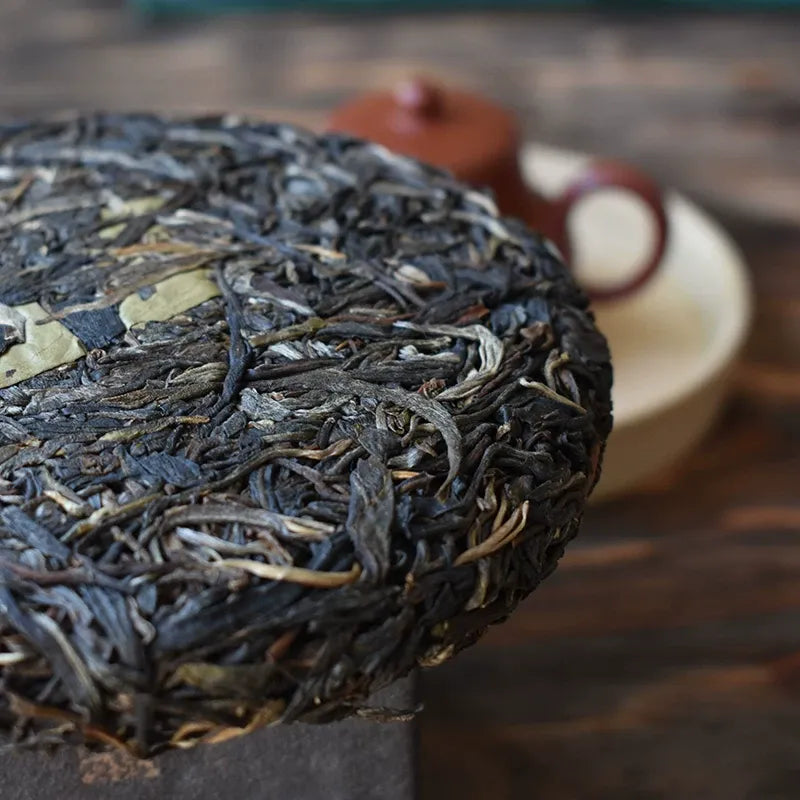
| Dry Leaf | Tightly rolled, evenly graded strands with a lustrous dark green sheen. White downy buds are visible throughout the cake surface. The dry leaf releases a clean, high-noted mountain honey fragrance — cool and crisp, with a whisper of wildflower. |
| Liquor | Bright golden-yellow, crystal clear, with high gloss and excellent clarity. The tea heavily coats the glass — a visible sign of pectin-rich old-tree material. As the session progresses, the color deepens slightly while maintaining brightness. |
| Aroma | A soaring, high-pitched mountain floral bouquet with rich honeyed sweetness. The fragrance has strong penetration — it fills the room from the first pour. The empty cup retains a lasting honey-cool sweetness long after the tea is gone. Across infusions, the floral notes shift from fresh wildflower in early steeps to deeper nectar sweetness in later rounds. |
| Taste | Clean, immediate sweetness arrives with the first sip — direct and unhesitating, with no off-flavors. Bitterness is light, astringency is minimal. The tea is full-flavored and structured: each steep presents a clear beginning, middle, and finish, with the sweetness building rather than fading across infusions. This is the hallmark of Zhengqitang's balanced character: sweet enough for Bingdao comparisons, structured enough to stand on its own. |
| Mouthfeel | Thick and enveloping with a full, smooth texture. The liquor is substantial without being heavy — it coats the mouth completely and leaves a distinct wrapping sensation in the throat after swallowing. No thinness, no hollowness: this is old-tree material that fills the cup and the palate. |
| Finish | Swift, forceful huigan (huigan, pleasant aftertaste) arrives within seconds and builds rapidly. Saliva production is generous and sustained. The throat feeling is long and deep — a clean, cooling sweetness that persists for 10 minutes or more. This is where Zhengqitang's Dongbanshan backbone announces itself most clearly. |
| Longevity | 12–15 infusions in gongfu style. Bitterness completely recedes after steep 3, and the tea enters a long, sweet plateau where the flavor stays clean and satisfying through the final rounds. The later steeps are sweeter than the early ones — a reliable sign of quality old-tree raw material. |
Who Is This Tea For?
- The Pu-erh Beginner (Who Fears Bitterness). If you've heard that raw pu-erh is "too bitter" or "too intense" for newcomers — Zhengqitang is the tea that disproves that. Its bitterness is ghost-light, its sweetness arrives instantly, and there's zero harsh astringency. This is a sheng pu-erh you can enjoy from your very first session. No learning curve required.
- The Value-Seeking Connoisseur. You know what Bingdao tastes like. You also know what it costs. Zhengqitang delivers the same honeyed-floral sweetness and old-tree depth at a fraction of the price — 3–5x less than a comparable Bingdao cake. For experienced drinkers who buy with their palate rather than their wallet, this is the Mengku raw pu-erh that makes the most sense.
- The Daily Drinker & Collector. Zhengqitang's balanced character makes it equally suited to two very different roles: an everyday office tea that brews beautifully in a mug, and a serious aging candidate that will reward 5–10 years of patient storage. Buy one cake to drink now, and one to forget in the back of your tea cabinet.
How Zhengqitang Compares to Other Mengku Teas
Zhengqitang belongs to Mengku's Dongbanshan (East Half Mountain) range — the same tea region that produces Bingdao. Here's how it compares to the most famous Mengku terroirs:
| Terroir | Sweetness | Structure & Body | Value |
|---|---|---|---|
| Bingdao (冰岛) | Extremely sweet, silky, benchmark honey character | Soft, rounded, gentle — sometimes lacking backbone | Very expensive — $500+ per cake |
| Xigui (昔归) | Rocky-sweet, mineral, complex | Strong, structured, pronounced body | Premium — $200+ per cake |
| Zhengqitang | Honey-floral sweet, clean, immediate — comparable to Bingdao | Full, structured, long throat finish — stronger than Bingdao | Excellent value — sweet + structured at accessible pricing |
Zhengqitang occupies a unique position: it's sweeter than most Dongbanshan teas and more structured than Bingdao. If you find Bingdao delicious but slightly too soft, and Xigui compelling but too intense for daily drinking, Zhengqitang is the middle ground — and for many, the ideal balance.
Product Details
| Brand | Xi Gui Hao (昔归号) |
| Tea Type | Raw Pu-erh Tea (Sheng Puerh) |
| Vintage | 2025 Spring Harvest (First Flush) |
| Origin | Zhengqitang Village, Dongbanshan, Mengku, Shuangjiang, Lincang, Yunnan, China |
| Tree Age | Old-Growth Trees (~200 years) |
| Altitude | ~1,800m |
| Net Weight | 357g (12.59oz) |
| Format | Traditional stone-pressed cake — hand-fixed, hand-rolled, sun-dried |
| Processing | Hand-fixed (sha qing / 杀青), hand-rolled, natural sun-dried (sun-dried maocha), traditional stone-pressed |
How to Brew Zhengqitang Raw Pu-erh Tea
Gongfu Style (Recommended)
- Ratio: 7g to 120–150ml gaiwan (gaiwan, lidded tea bowl)
- Temperature: 93°C – 95°C (199°F – 203°F) — near-boiling works well for this tea's structured character
- Rinse: 1 quick rinse, 5 seconds, discard
- Steeping: 8–10 seconds for the first 3 infusions, increase by 3–5 seconds each round. 12–15 infusions achievable. After steep 3, bitterness fully recedes and the tea enters a long, sweet plateau. Pay attention to the throat finish — it builds across infusions.
Simple Mug Style
Break off ~3g from the cake (a small corner piece), add to a 300ml mug with 90–93°C water, steep 2–3 minutes. Refill as you drink — you'll get 3–4 satisfying cups from the same leaves, each one slightly lighter and sweeter. Zhengqitang's gentle bitterness makes it one of the most mug-friendly raw pu-erh teas available.
How to Store (Aging Potential)
Store in a cool, dry, well-ventilated place away from direct sunlight and strong odors. Ideal storage conditions: temperature 20–25°C (68–77°F), relative humidity 55–65%. Keep the cake in its original cotton paper wrapper or transfer to a breathable kraft paper bag or unglazed clay jar. Avoid temperature fluctuations and any source of foreign odors — pu-erh leaves are highly absorbent.
As a 2025 spring raw pu-erh from old-growth trees, Zhengqitang has significant aging potential. Over 1–3 years, the bright floral notes will mellow into warm honeyed sweetness, and any remaining trace of bitterness will completely vanish. At 3–8 years, aged complexity emerges — the tea becomes deeper, smoother, and more resonant. Beyond 8 years, expect date-fruit and herbal notes to develop, with collection value increasing substantially. Buy one cake to drink now, and one to hold.
Suitable for long-term aging when stored properly.
Zhengqitang Raw Pu-erh Tea — Frequently Asked Questions
Why is Zhengqitang called "Little Bingdao"?
Its honeyed sweetness and clean, immediate flavor closely mirror Bingdao's legendary profile — but at a fraction of the cost. Chinese tea collectors coined the term because Zhengqitang delivers the Bingdao experience (sweet, floral, zero bitterness) at roughly 3–5x better value, while adding Dongbanshan's signature structural backbone that pure Bingdao sometimes lacks.
Can I drink this 2025 raw pu-erh right now?
Yes — absolutely. Zhengqitang's 2025 spring material is remarkably gentle for a young sheng pu-erh. Bitterness is ghost-light, astringency is minimal, and the sweetness arrives immediately. There's no harshness, no "green" bite, no need to age it before enjoying. It's one of the most approachable young raw pu-erh teas available while also possessing excellent long-term aging potential.
Is Zhengqitang's depth and vitality noticeable?
Yes. Zhengqitang is recognized as one of the most structurally expressive teas in Dongbanshan. Many drinkers notice a distinctive warming sensation and a deep, resonant throat feeling that builds across infusions — this is the Dongbanshan backbone that distinguishes it from purely soft, sweet styles. The experience is one of balanced wholeness, not overwhelming intensity.
About caffeine in pu-erh: Like all real teas, raw pu-erh contains natural caffeine — actual caffeine content varies by brewing method, leaf-to-water ratio, and steeping time. Natural & Handcrafted: This product is made from natural tea leaves, hand-picked, hand-fixed (sha qing / 杀青), hand-rolled, sun-dried, and traditionally stone-pressed in Yunnan, China. It contains no artificial additives, flavorings, or preservatives. All aroma and flavor characteristics are the natural result of the tea's high-altitude growing environment and traditional processing methods. This product is a traditional tea beverage and is not intended to diagnose, treat, cure, or prevent any disease.
Share